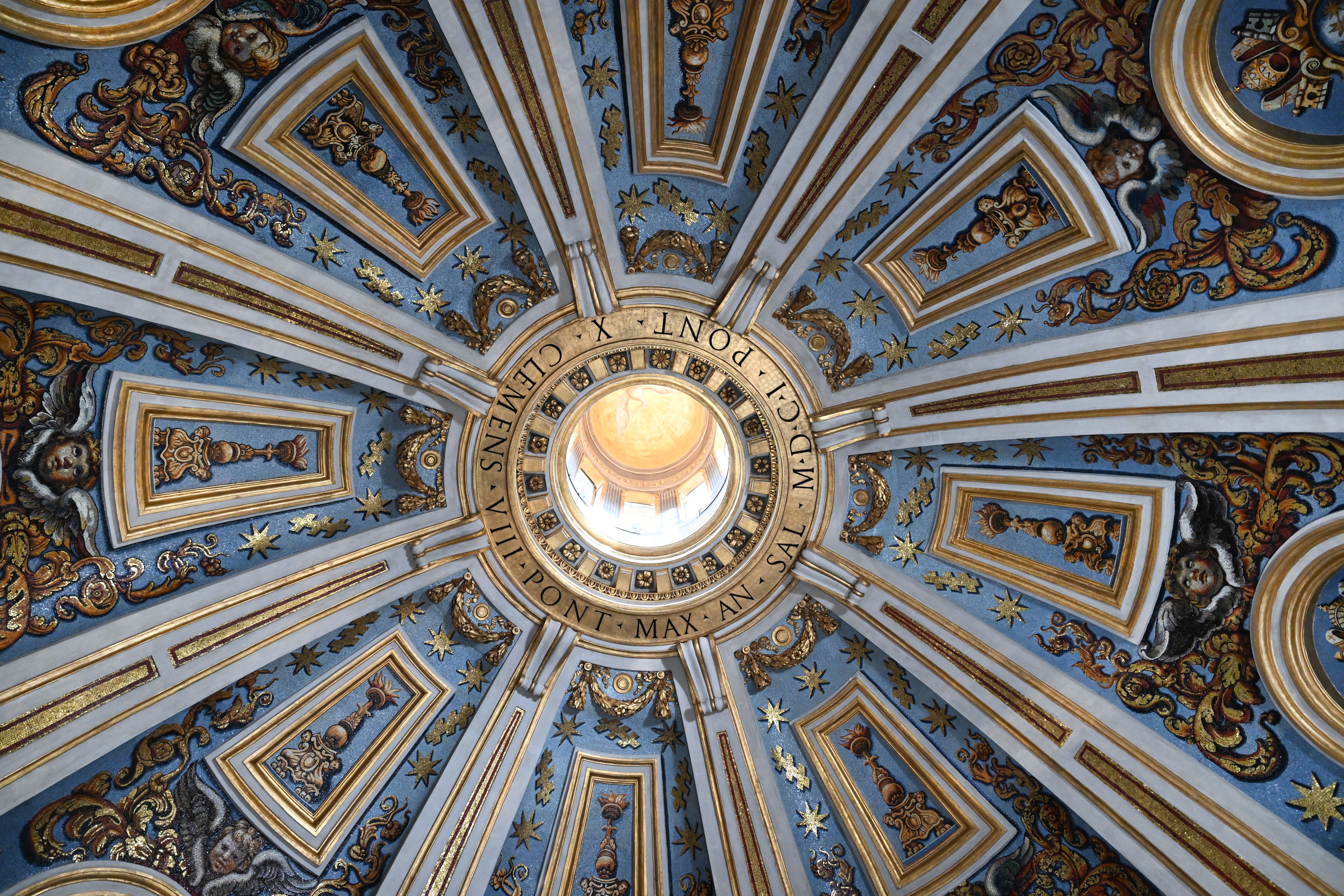
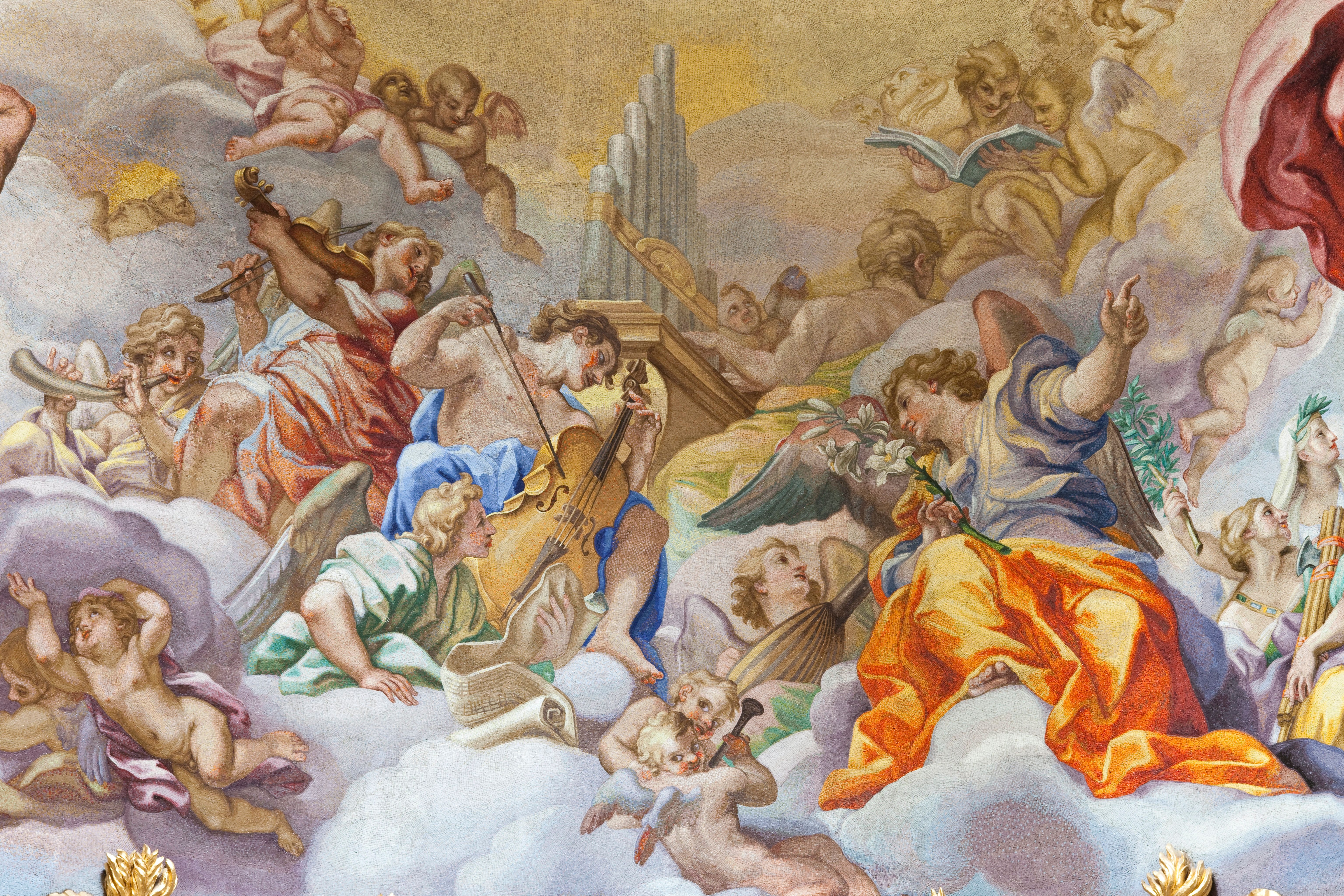
Vatican City, 18 September 2026 – The Fabbrica di San Pietro announces the completion of the conservation of the dome of the Clementine Chapel in Saint Peter’s Basilica, one of the most significant decorative projects of early seventeenth-century Rome. Begun in May 2025, the work covered 371 square metres of mosaics, created between 1601 and 1604 from designs by Cristofano Roncalli, known as “Il Pomarancio”. It also included the stucco decoration from the same period, restoring a unified reading of the entire decorative scheme.
Reasons for the restoration
Regular monitoring by the Fabbrica di San Pietro had revealed the need to conserve the dome’s mosaic decoration.
The installation of scaffolding in January 2025 made it possible to examine the condition of the surfaces more closely and identify issues associated with the natural deterioration of materials and with work carried out over time.
The inspections also covered the stucco decoration, which was subsequently included in the programme of works to ensure the stability of the entire decorative scheme and its long-term preservation.
The restoration
The work was preceded by an extensive diagnostic campaign comprising photographic documentation, laboratory analysis of the constituent materials, digital mapping of deterioration and endoscopic investigations.
The survey and documentation were managed using Building Information Modeling (BIM). Survey data, deterioration maps and information on the work carried out were linked to a three-dimensional model of the dome. This produced a searchable digital archive that can be updated over time and will also support future monitoring and maintenance.
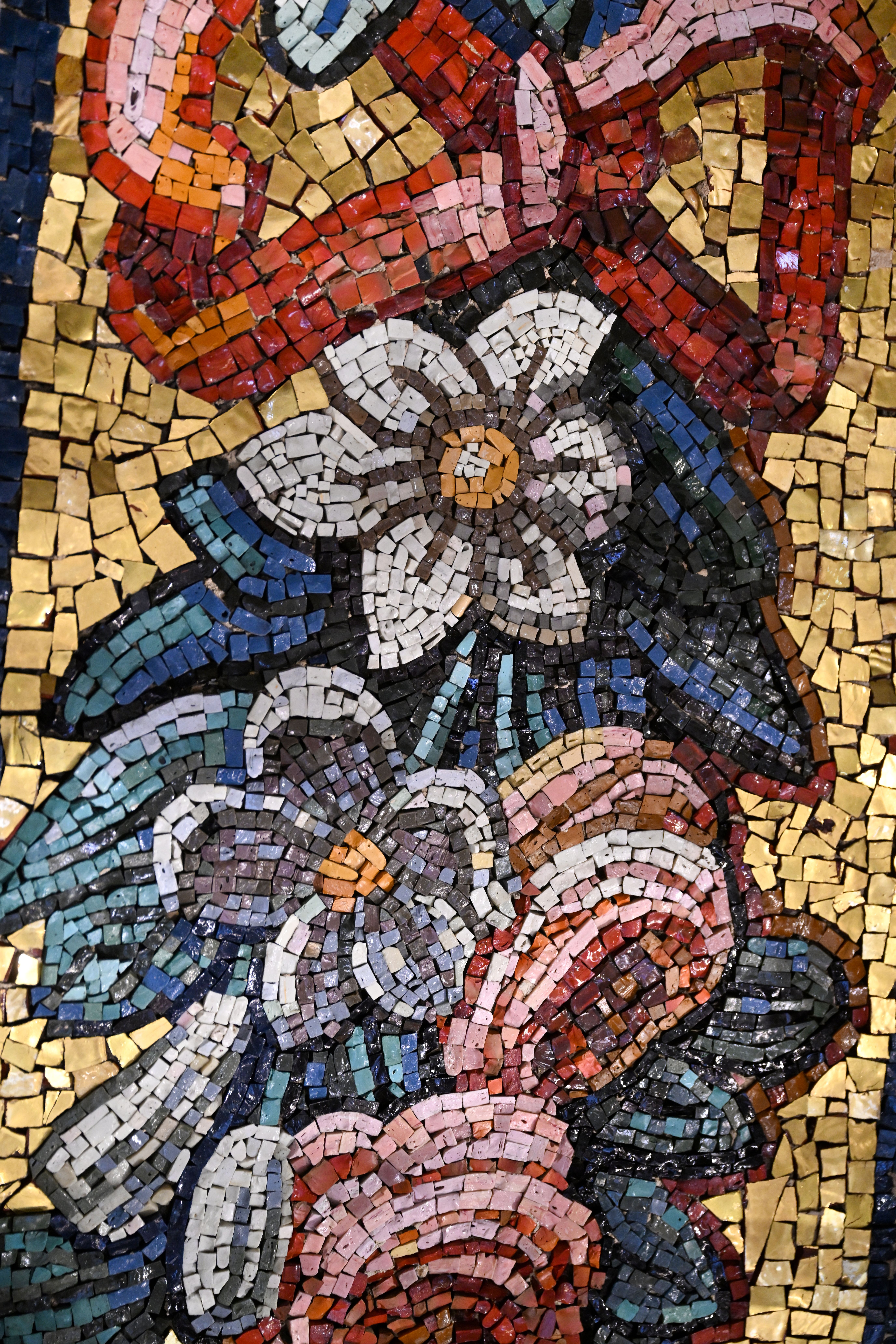
The practical work included preliminary cleaning and dust removal, preliminary consolidation of loose tesserae and cartelline, controlled cleaning, treatment of efflorescence, and surface and deep consolidation.
Incompatible elements were then removed, areas of loss were filled, and the surfaces received their final aesthetic treatment. In parallel, the stucco decorations underwent the same methodological and diagnostic process as the mosaic surfaces.
Following the preliminary work, the stucco decorations were cleaned and consolidated to restore adhesion and cohesion, both in the material forming the moulded elements and in the gilded layer. Areas of loss were then reintegrated, followed by the final aesthetic treatment.
All the materials used meet the requirements of chemical and physical compatibility, reversibility and re-treatability, in full accordance with the theoretical principles and current regulations governing the conservation of cultural heritage.
The work structurally consolidated supports at risk of detachment, addressed both intrinsic and external causes of deterioration, and restored the work’s formal and chromatic legibility.
Historical background
The chapel takes its name from Clement VIII, born Ippolito Aldobrandini, who commissioned its decoration. Built to a design by Michelangelo Buonarroti and completed by Giacomo della Porta in 1580 as the symmetrical counterpart to the Gregorian Chapel, it forms part of the group of spaces surrounding the Confession of Saint Peter.
Its iconographic programme belongs to the context of the Counter-Reformation and was shaped with the decisive contribution of Cardinal Cesare Baronio.
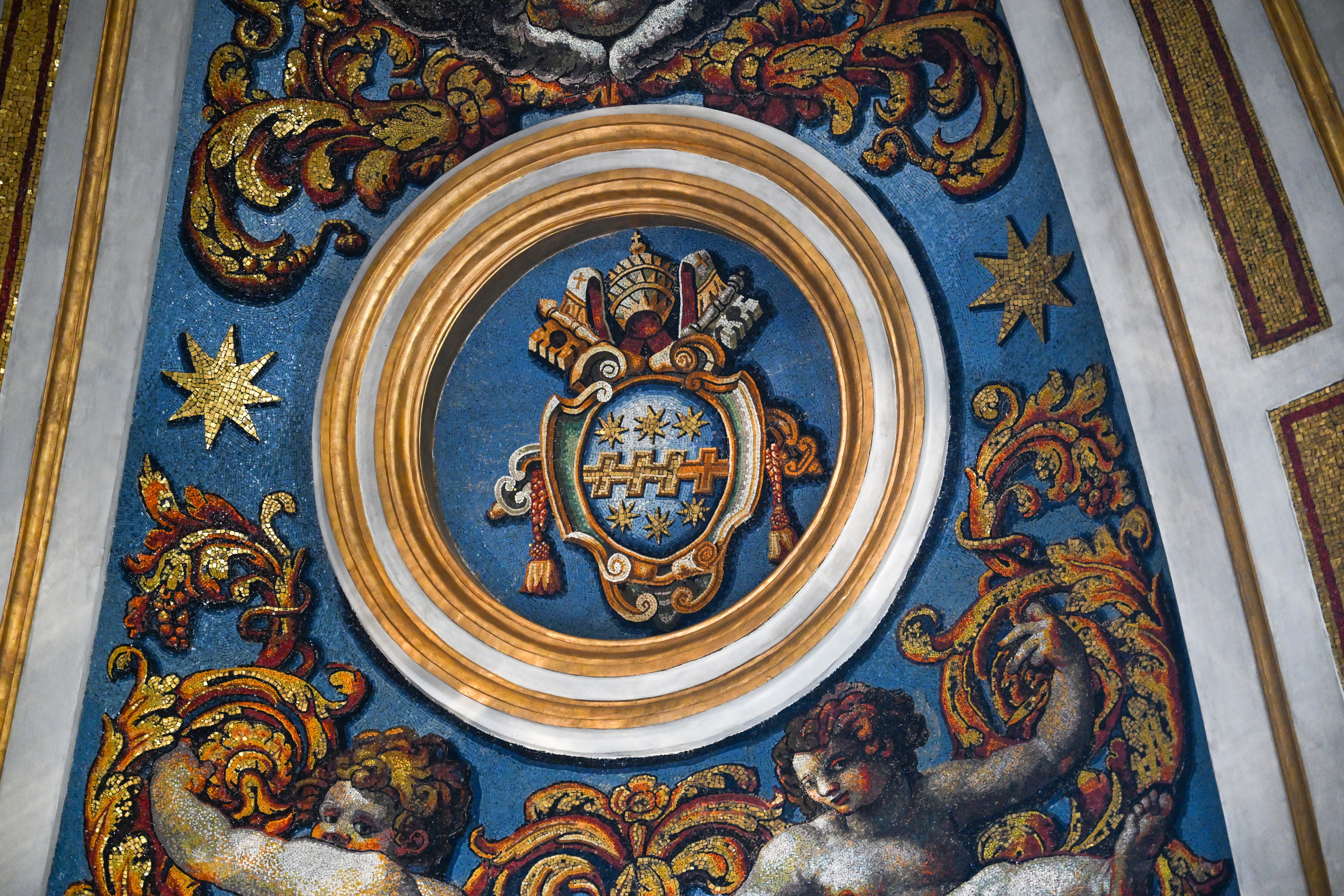
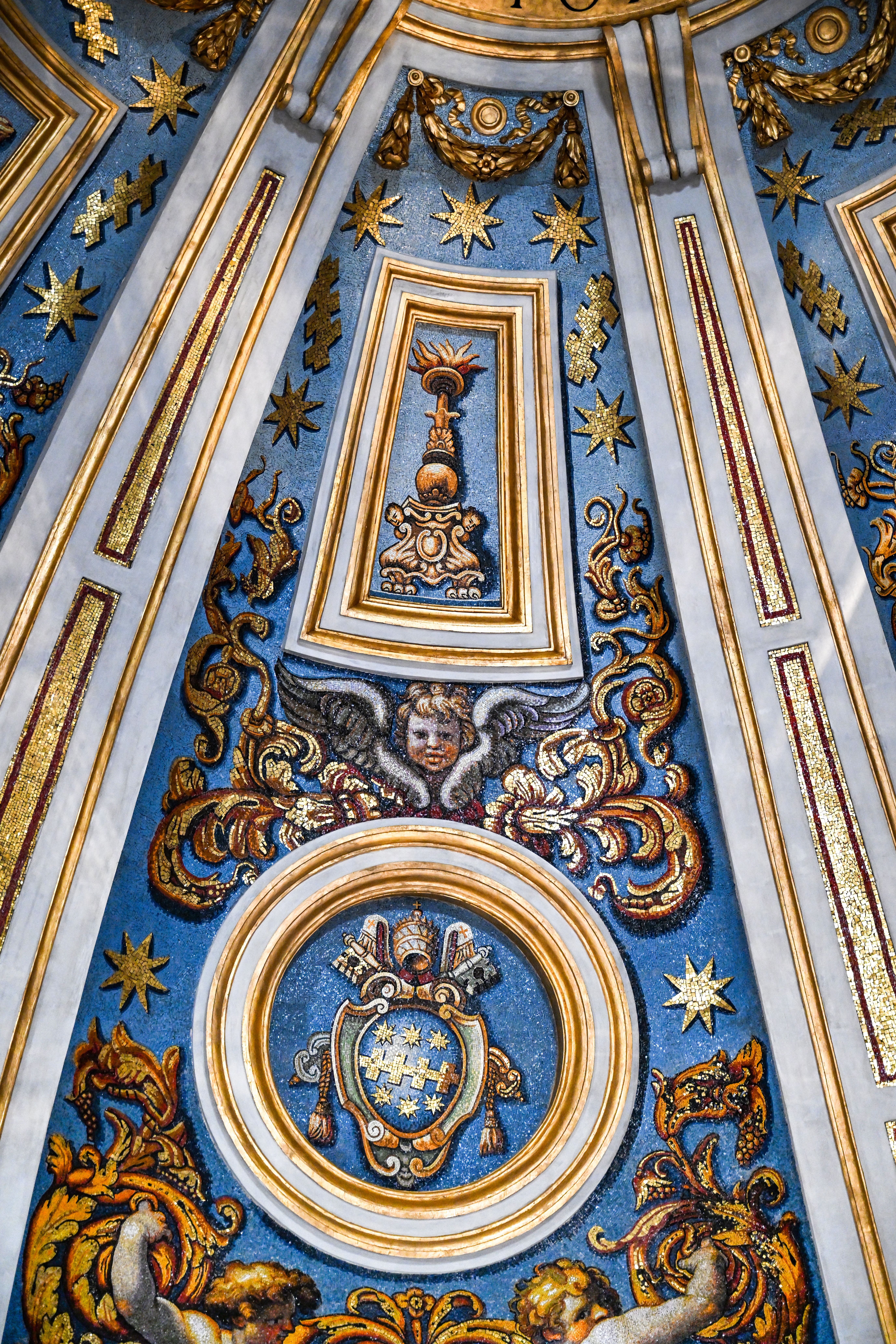
The mosaics were executed by a team of around ten masters, including Marcello Provenzale, Paolo Rossetti and Ranuccio Semprevivo. The four Doctors of the Church are depicted in the pendentives, while the lunettes contain biblical scenes. The dome features rich ornamental decoration with cherubs, garlands and heraldic symbols of the Aldobrandini family.








Copyright © 2026 Basilica Papale di San Pietro - Photos: © Fabbrica di San Pietro e Vatican Media - All Rights Reserved.