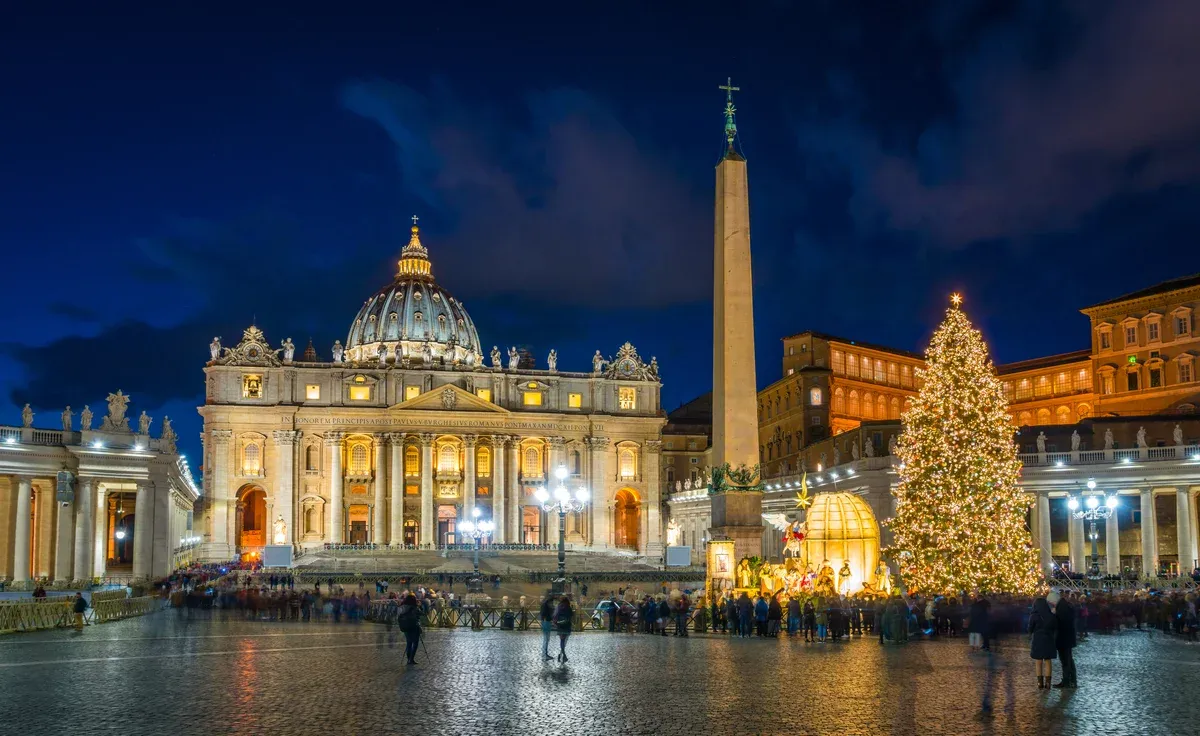
On December 8th, the Solemnity of the Immaculate Conception, the Nativity scene of St Peter’s Basilica will be presented. This year’s work, created by the Neapolitan master artisans of San Gregorio Armeno, Cantone and Costabile, has been set up with the support of the staff of the Fabbrica di San Pietro at the Altar of St Gregory the Great, in the left side aisle.
On Monday 8 December, at the end of Vespers (around 5:40 p.m.), His Eminence Cardinal Mauro Gambetti, Archpriest of the Papal Basilica of St Peter in the Vatican, will present and bless the Nativity scene.
The Nativity scene will be on display and open to visitors every day during the Basilica’s opening hours, until the conclusion of the Christmas Season, which coincides with the Feast of the Baptism of the Lord, Wednesday, 7 January 2026.
TECHNICAL DETAILS OF THE WORK
The scenography draws inspiration from the rural landscapes of ancient Campania Felix. Roman brick arches alternate with opus incertum walls made of the yellow tuff typical of the Pozzuoli area, creating a landscape reminiscent of the eighteenth-century Neapolitan Nativity tradition. The setting thus re-evokes traditional architecture and its symbolism, with particular attention to the rustic atmosphere that characterized the villages of the time.
At the centre of the composition are Mary, Joseph and the Infant Jesus, surrounded by figures crafted according to Neapolitan tradition: characters approximately 1.30 metres tall, recalling the shepherds of the eighteenth century. Around the Nativity scene unfolds a small “world”: three angels, the Magi, two pipers, the classic sleeping shepherd known as “Benino,” along with townsfolk, beggars and farm animals recreating the simple and lively atmosphere of a rural village.
The Nativity scene was created by masters Cantone and Costabile using the traditional Neapolitan methods. The heads, hands and feet are modelled in polychrome terracotta; the eyes are crystal; and the colouring is done with oil paint. Inside each figure, an iron structure provides stability, while the garments, made with fabrics shaped directly onto the body, follow the authentic Neapolitan artisanal tradition.







Copyright © 2026 Basilica Papale di San Pietro - Photos: © Fabbrica di San Pietro e Vatican Media - All Rights Reserved.